In today’s digital world, businesses need effective ways to connect with customers, showcase their services, and grow online. Two popular options are mobile applications and websites. Both can help your business build an online presence, but they serve different purposes.
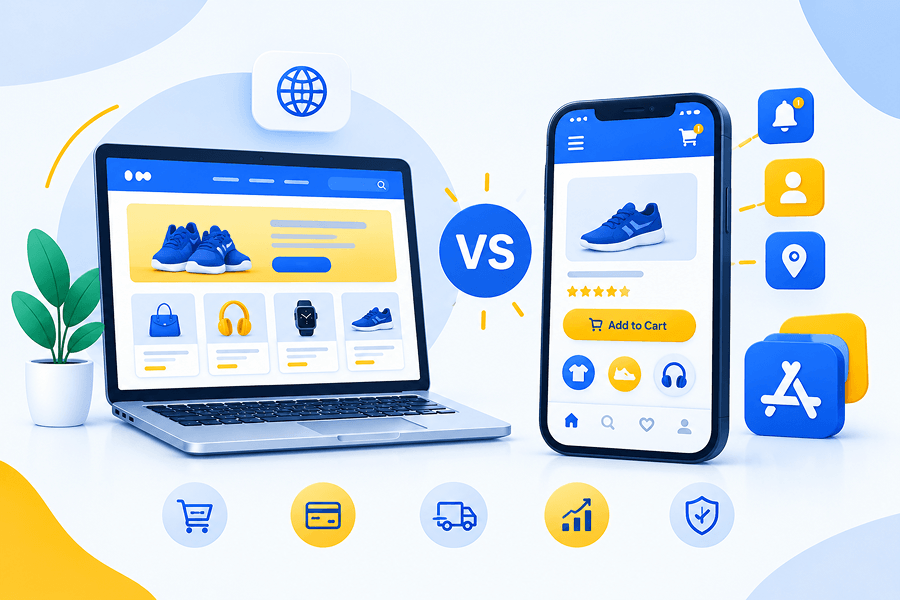
A website can help customers discover your business, explore your services, and contact you through a browser. A mobile app can offer a more personalised experience with features such as push notifications, customer accounts, and device integrations.
Understanding the differences can help you invest in the right digital solution for your business.
"When comparing a mobile app vs website, the right choice depends on your business goals, target audience, budget, and the experience you want to provide.."
What Is a Mobile App?
A mobile app is a software application designed primarily for smartphones and tablets. Customers usually download it from an app store or install it through another supported distribution method.
Mobile apps can provide features such as personalised dashboards, push notifications, saved preferences, loyalty programmes, booking systems, and selected offline capabilities.
For example, a hotel can use a mobile app to let customers view bookings, receive updates, and access reservation details. A retail business might use an app to offer personalised product recommendations and loyalty rewards.
Mobile apps are particularly useful when customers interact with your business regularly or need specialised mobile features.
What Is a Website?
A website is a collection of web pages that customers access through a browser on a smartphone, tablet, laptop, or desktop computer.
A professional business website can present your services, display products, collect enquiries, accept bookings, publish articles, or support online purchases.
Unlike a typical app installation, customers generally do not need to download anything to visit a website. They can open a link and start browsing.
Websites are often a practical starting point for businesses that want to establish their online presence, attract customers through search engines, and share information easily.
Key Differences Between Mobile Apps and Websites
Accessibility and Convenience
Websites are easy to access through a browser and can be shared using a simple link. Customers can visit them without installing an application.
Mobile apps require installation in many common use cases, but they can provide convenient access through a home-screen icon and features designed for frequent use.
User Experience
A mobile-friendly website can provide a smooth experience across different screen sizes. A mobile app can offer deeper personalisation and a more integrated experience for tasks customers perform repeatedly.
The best option depends on how customers use your service and which features are necessary.
Features and Functionality
Websites can support online shopping, contact forms, bookings, dashboards, and many other business functions.
Mobile apps can additionally use supported device capabilities such as push notifications, camera access, location services, and selected offline functionality. Actual capabilities depend on the operating system, permissions, and implementation.
Marketing and Customer Engagement
Websites support search engine visibility, shareable links, content marketing, and online advertising.
Mobile apps can support direct customer engagement through push notifications, loyalty features, and personalised experiences, provided customers grant the necessary permissions.
Development and Maintenance Costs
Website costs depend on the design, functionality, integrations, hosting, and ongoing maintenance required.
Mobile app costs vary according to platform support, design, backend services, device testing, app-store requirements, and updates. Developing for multiple platforms can add complexity, although cross-platform frameworks may reduce duplicated development work.
Neither option is automatically cheaper in every situation. Compare the full cost of building, maintaining, and operating the solution.
How to Choose the Right Digital Solution
A website is a collection of web pages that customers access through a browser on a smartphone, tablet, laptop, or desktop
Define Your Business Goals
Decide whether you want to generate leads, sell products, manage bookings, improve customer retention, or automate business processes. Clear goals help determine which features are essential.
Understand Your Customers
Consider how your customers discover your business, which devices they use, how frequently they interact with you, and what problems they need to solve.
Compare Your Budget
Consider development, hosting, maintenance, security, updates, integrations, and future improvements—not only the initial project price.
Prioritise Essential Features
Begin with the functions that directly support your goals. Avoid paying for advanced capabilities that customers may not need.
Plan for Future Growth
Choose a solution that can evolve with your business. Consider how you might later add online payments, customer accounts, analytics, integrations, or a complementary mobile app.
Conclusion
Choosing between a mobile app and a website depends on what your business needs to achieve. Websites are useful for online visibility, information sharing, lead generation, and e-commerce. Mobile apps can be valuable for personalised experiences, frequent customer interactions, notifications, and specialised mobile features.
For many businesses, starting with a professional, mobile-friendly website is a practical way to establish an online presence. As your customer base and requirements grow, a mobile app may become a valuable addition.
Ready to choose the right digital solution for your business? Happy Source can help you plan and develop a website or mobile application that aligns with your goals.
Explore our Web & E-Commerce Services, learn about Android & Mobile App Development, or contact Happy Source to discuss your project.